
Radon Testing in Williamsburg VA
Radon is invisible, odorless, and it changes over time. A single short test can be helpful during a real estate transaction, but the real health concern is long-term exposure. Our goal is to help you understand what the numbers mean, how they can fluctuate, and what kind of testing gives you the clearest picture.
What Radon Is, and Why Time Matters
Radon is a naturally occurring radioactive gas that can enter a home through the soil and small openings in the foundation. The health concern is not one moment in time, it is exposure over time. That is why understanding the long-term average matters more than any single reading.
Radon levels can vary day to day and season to season, which means a short test is less likely than a long-term test to represent a true year-round average. Learn More
Radon Levels Fluctuate, Here’s Why That Matters
Radon is not steady like a thermostat setting. Levels can change based on:
-
Season (levels are often higher during colder months)
-
Weather patterns
-
How the home is ventilated
-
HVAC operation and building pressure differences
In Virginia, radon levels commonly peak during colder winter months, which is why the heating season is especially meaningful when you want a realistic picture of risk. Learn More
The 48-Hour Real Estate Test, Helpful but Limited
During a real estate transaction, time is limited. A short-term test, often 48 hours under closed-house conditions, is the most practical snapshot available in that window.
It can be useful for decision-making during negotiations, but it is still only a snapshot. Because radon varies, a short test is less likely than a long test to reflect the year-round average.
If you want to make a truly informed decision about health risk, long-term measurement is the better tool.
Best Practice for Informed Decisions: Long-Term Testing During Heating Season
If time allows, the best approach is long-term testing that captures seasonal patterns. Public health guidance commonly describes long-term testing as more than 90 days, and Virginia recommends long-term testing whenever possible as the most accurate way to determine a year-round average.
Practical guidance that works well for homeowners:
-
Test for 6 to 9 months during the heating season if possible
-
Focus on the lowest livable level of the home (where radon is often highest)
This approach gives you a much clearer picture than a two-day snapshot.
Your Options: Professional Test or Plug-In Monitor
Option 1: Professional short-term radon test
This is the standard approach during real estate transactions. It produces a fast result that can support negotiations and next steps.
Option 2: Plug-in continuous radon monitor for year-round insight
If your goal is understanding exposure over time, a plug-in monitor can provide ongoing measurement for less than the cost of many professional tests. It helps you see how levels behave across weather changes, seasons, and lifestyle patterns.
We're happy to perform radon testing, and we also want you to have the most useful information for your decision. For many homeowners, a plug-in monitor is the best value for long-term clarity.
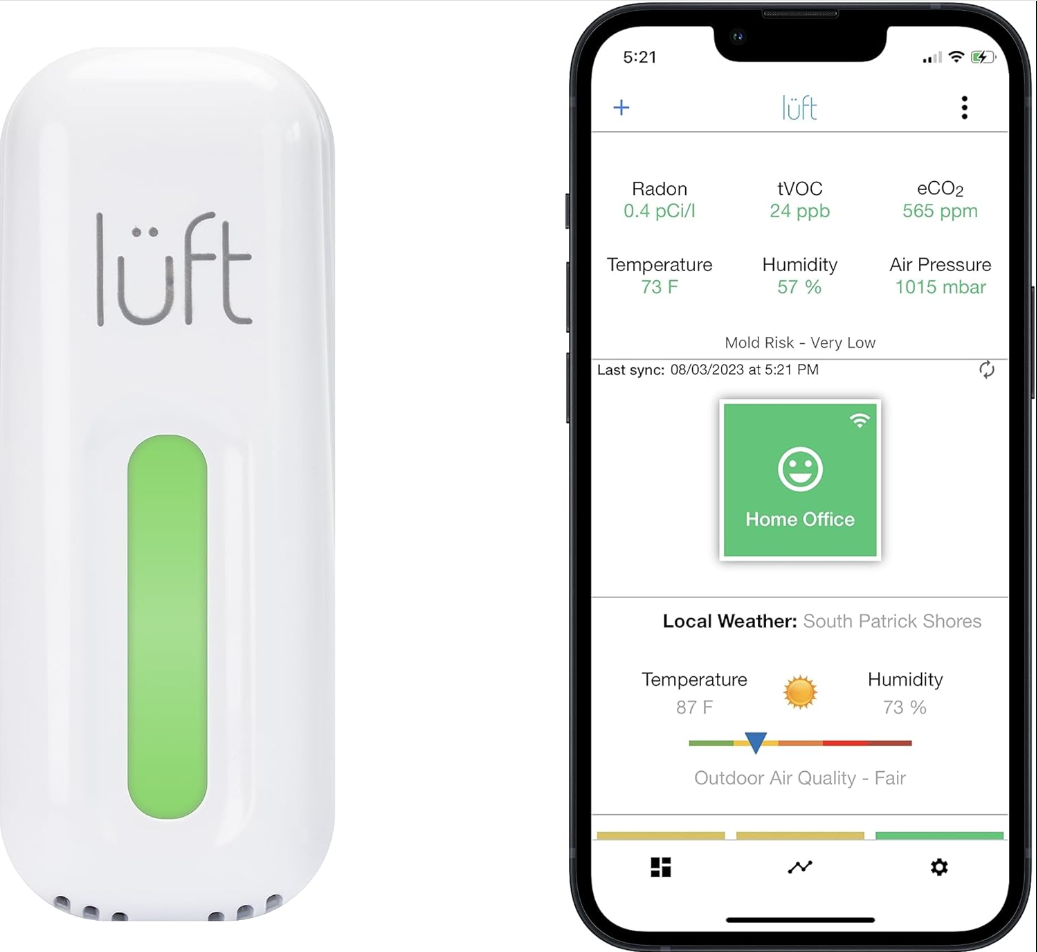
Because radon levels fluctuate, a single short-term test does not always tell the full story. A plug-in continuous monitor like the Sun Radon Lüft allows you to measure radon levels over months instead of days, giving you a clearer picture of long-term exposure.
If you’re looking for an affordable way to monitor radon year-round, we recommend the Lüft monitor by SunRadon. Use Coupon Code HEALTHYAIR
*Disclosure: We may receive a small commission if you purchase through this link. We only recommend products we trust and believe provide real value. This is the monitor our lead inspector uses to monitor radon levels in their home.

Local Context: Radon in Williamsburg
Williamsburg has been the focus of local research and mapping efforts related to radon risk zones. William & Mary researchers have published work on fine-grained radon risk mapping and validation studies in the Williamsburg area.
Frequently Asked Questions
Q: Why do you keep saying “exposure over time”?
A: Because health risk relates to the average level you breathe over months and years, not just one reading. A short test can be useful, but it does not describe your long-term exposure.
Q: Do radon levels really change that much?
A: Yes. Radon can vary day to day and season to season. That variability is exactly why long-term testing is more likely to reflect a true year-round average.
Q: If radon fluctuates, what does a 48-hour test actually tell me?
A: It tells you what the level looked like during that short window, typically under closed-house conditions. In a real estate transaction, it’s the most practical snapshot available, but it should be treated as a snapshot, not a complete exposure picture.
Q: Is a 48-hour test “good enough” to make a health decision?
A: It can help with transaction decisions, but it usually does not provide enough information to understand long-term exposure. If you want to make a more informed health decision, longer-term measurement is the better tool. EPA specifically notes a short-term test is less likely than a long-term test to tell you your year-round average.
Q: What is the best way to test if I want real clarity?
A: Long-term testing. CDC describes long-term testing as more than 90 days, and Virginia recommends long-term testing whenever possible to determine the year-round average.
Q: Why focus on the heating season?
A: In Virginia, radon levels commonly reach their maximum during colder winter months. Heating season testing captures conditions that often represent higher risk.
Q: You mentioned 6 to 9 months. Is that required?
A: No. It’s a practical window that captures meaningful seasonal behavior and gives you far better information than a two-day snapshot. If you can only do 90+ days, that is still a major improvement.
Q: What part of the home should be tested?
A: The lowest livable level. Virginia recommends testing the lowest livable level because that’s where higher readings are typically found.
Q: If a short test comes back elevated, what should I do?
A: Start by staying calm. Elevated results are common in many areas, including here. Next steps often include confirming results and discussing mitigation options. EPA and VDH resources explain decision thresholds and options for reducing levels.
Q: Should I just buy a plug-in monitor instead of paying for a test?
A: If your goal is long-term exposure understanding, a plug-in continuous monitor is often the best value. It gives you year-round measurement and shows trends over time. If you need an official short-term test for a transaction, professional testing still makes sense.
Q: Does opening windows change radon?
A: Yes. Ventilation can change indoor radon levels. That is one reason standardized conditions are used during short-term testing, and another reason long-term monitoring is helpful.
Q: How often should homeowners retest?
A: Retesting is smart after major renovations, HVAC changes, or foundation work, and periodically over time because conditions can change.